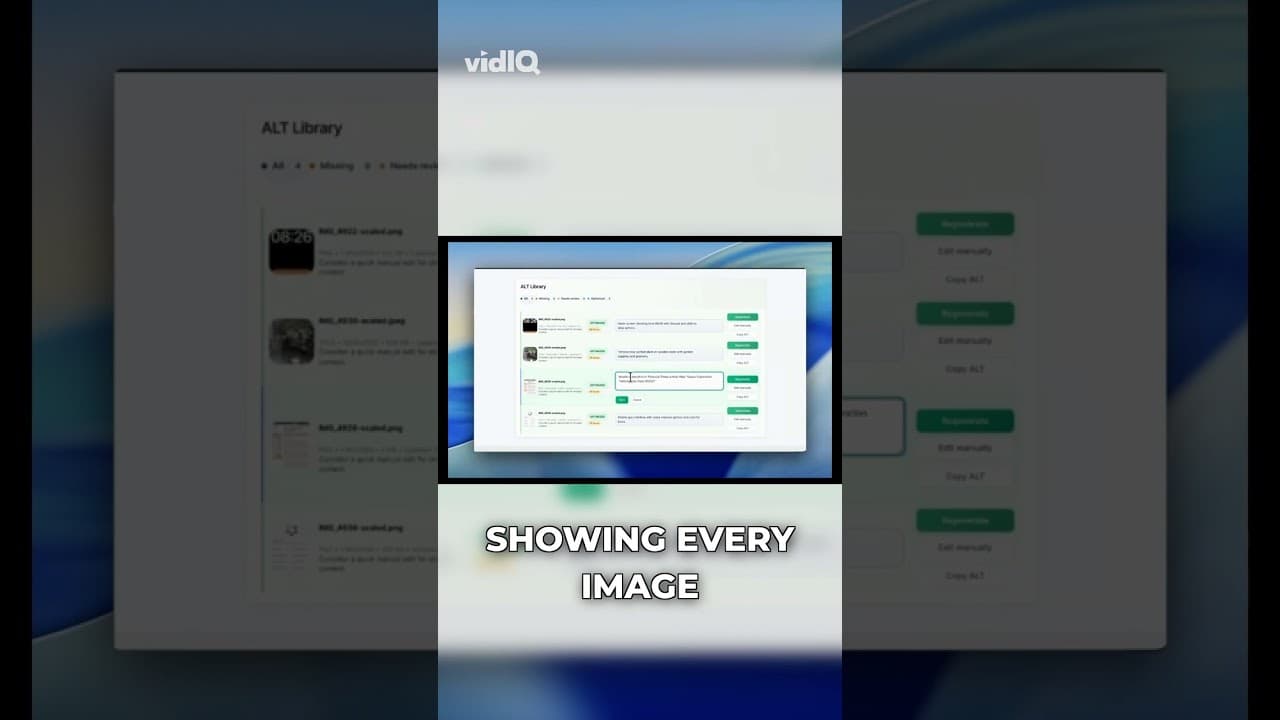
What a WordPress Alt Text Quality Score Actually Measures
A WordPress alt text quality score isn't just present or missing. Here's what factors actually go into scoring alt text, and what a low score really means.
"Present or missing" is a coarse way to judge alt text. An image with alt="image" technically has alt text — and it's nearly as useless as having none. A quality score is meant to catch that gap, but only if you know what it's actually checking. Otherwise it's just another number you glance at without understanding.
Here's a short video walking through what goes into a real quality score, rather than a simple yes/no check.
Why present/missing isn't enough
If your only check is "does this field have anything in it," you'll count alt="IMG_4021" and alt="A red leather armchair with brass studs, photographed against a white background" as equally fine. They're not remotely equivalent. The first tells a screen reader user and a search engine nothing they didn't already know from the filename. The second describes the actual product, in enough detail to be useful for both understanding and image search ranking.
A quality score exists to separate those two cases without you having to read every single alt attribute yourself. Understanding what it's actually measuring tells you what to fix when a score comes back low, rather than just re-saving the same generic text and hoping the number goes up.
The factors that typically go into a quality score
Specificity. Does the text describe what's actually in the image, or is it generic enough to apply to almost any picture? "Product photo" fits every product on the site. "Grey wool overcoat with a notched lapel, buttoned, front view" fits one.
Length and structure. Too short (a single word) usually signals low information content. Too long, and it starts reading like an unnatural keyword list rather than a description a person would actually write.
Keyword stuffing. Alt text crammed with repeated search terms — "shoes running shoes best running shoes buy running shoes" — scores worse than natural language, both because it reads badly and because search engines are explicitly designed to discount this pattern.
Redundancy with surrounding text. If the alt text just repeats the image's caption or the page's title word for word, it's not adding independent information. Good alt text describes the image itself, which is often more specific than the page it sits on.
Filename leakage. Alt text that's obviously just the uploaded filename with underscores swapped for spaces — "DSC 4021" or "product photo final v2" — reads as unedited, because it is.
Language quality. Alt text should read as a real sentence or phrase, not a fragment or a string of disconnected nouns.
What a low score should tell you to do
A low score isn't a verdict to accept — it's a diagnostic. The right response depends on which factor is driving it. If the score is low because the text is a filename, you need a description written from scratch. If it's low because of keyword stuffing, you need to cut the field back to plain, specific language. If it's low because of redundancy with the caption, you need to describe the image itself rather than restate context that's already visible elsewhere on the page.
- Pull the lowest-scoring images first, not a random sample — they're the clearest wins.
- Check which factor is failing, rather than assuming every low score has the same cause.
- Rewrite with the specific factor in mind — add detail for vagueness, cut repetition for stuffing, replace the filename entirely rather than editing around it.
- Re-score after the fix to confirm the change actually moved the number, not just changed the text.
Using an AI-assisted score without losing the plot
A quality score is only useful if you trust what it's counting, and you should still spot-check the images it flags rather than treating the number as gospel. The OpptiAI Alt Text plugin scores your existing alt text against factors like these and drafts replacements for the weakest entries, which you review before anything saves. The score tells you where to look; you still decide whether the suggested rewrite is actually right for that image.
If you want to see how your own site's alt text holds up before touching the plugin at all, a free image SEO audit will show you what's currently live on your public pages.
Frequently asked questions
What makes WordPress alt text score poorly even if the field isn't empty?
The most common causes are generic text that could apply to any image ("product photo," "image"), filenames left unedited ("IMG_4021"), keyword stuffing (repeating the same search term multiple times), and text that just repeats the caption or page title instead of describing the image itself. All of these technically fill the field, but none of them give a screen reader user or a search engine useful information about what's actually shown.
Is a higher alt text quality score always better for SEO?
Generally yes, because the factors that raise a quality score — specificity, natural language, non-redundant description — are the same qualities that make an image more likely to surface in image search and more useful to accessibility tools. That said, chasing a numeric score for its own sake can backfire if it pushes you toward padding descriptions with extra detail that isn't actually there in the image. Accurate and specific beats long and score-optimised.
Should I trust an AI-generated alt text quality score without checking it myself?
Use it to prioritise, not to skip review entirely. A quality score is good at flagging patterns — filenames, stuffing, generic phrasing — reliably and at scale, which is exactly the kind of thing manual review misses when you're looking at thousands of images. But the final judgement on whether a specific description is accurate for that specific image is still worth a human glance, especially for your highest-traffic pages.
Related Posts
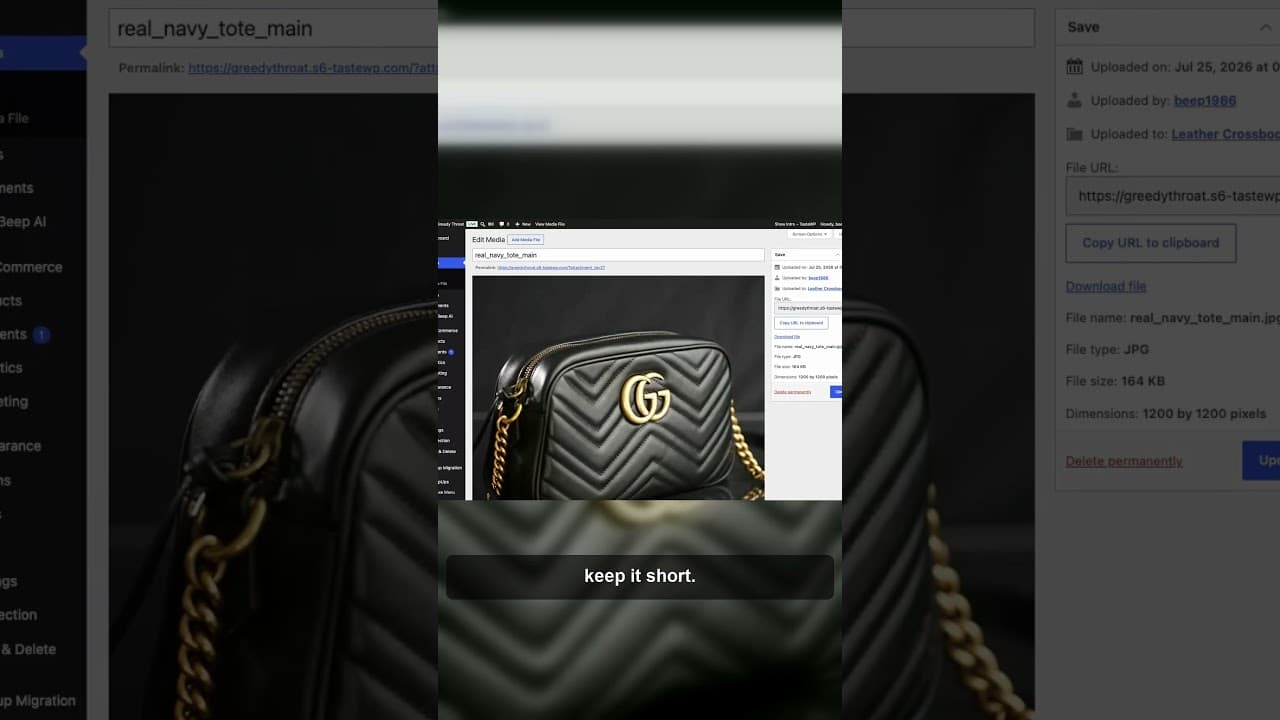
A Review-Edit-Save Workflow for AI Alt Text
AI can draft alt text in seconds, but a good result still needs a process. Here's a review-edit-save workflow that catches mistakes before they publish.
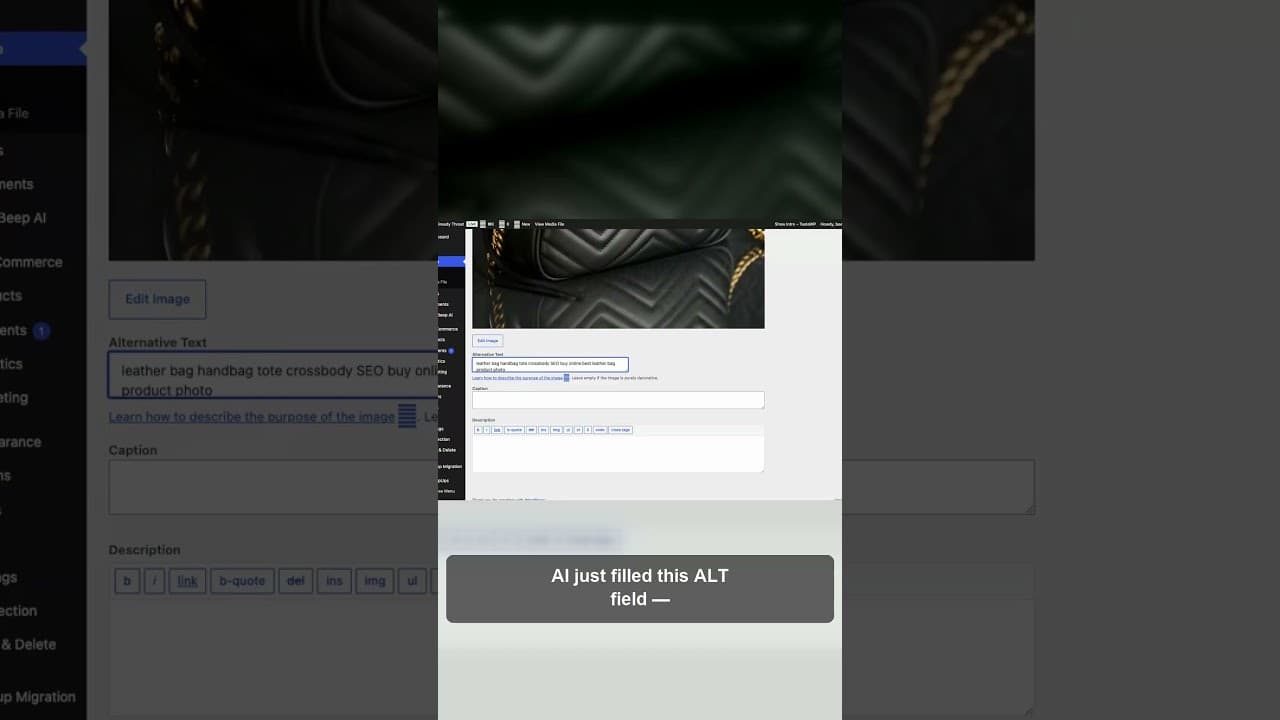
Don't Save AI Alt Text Without This Quick Check
AI can fill an alt text field in seconds, but it can also fill it wrong. Here's the quick check to run before you hit save on any AI-drafted alt text.
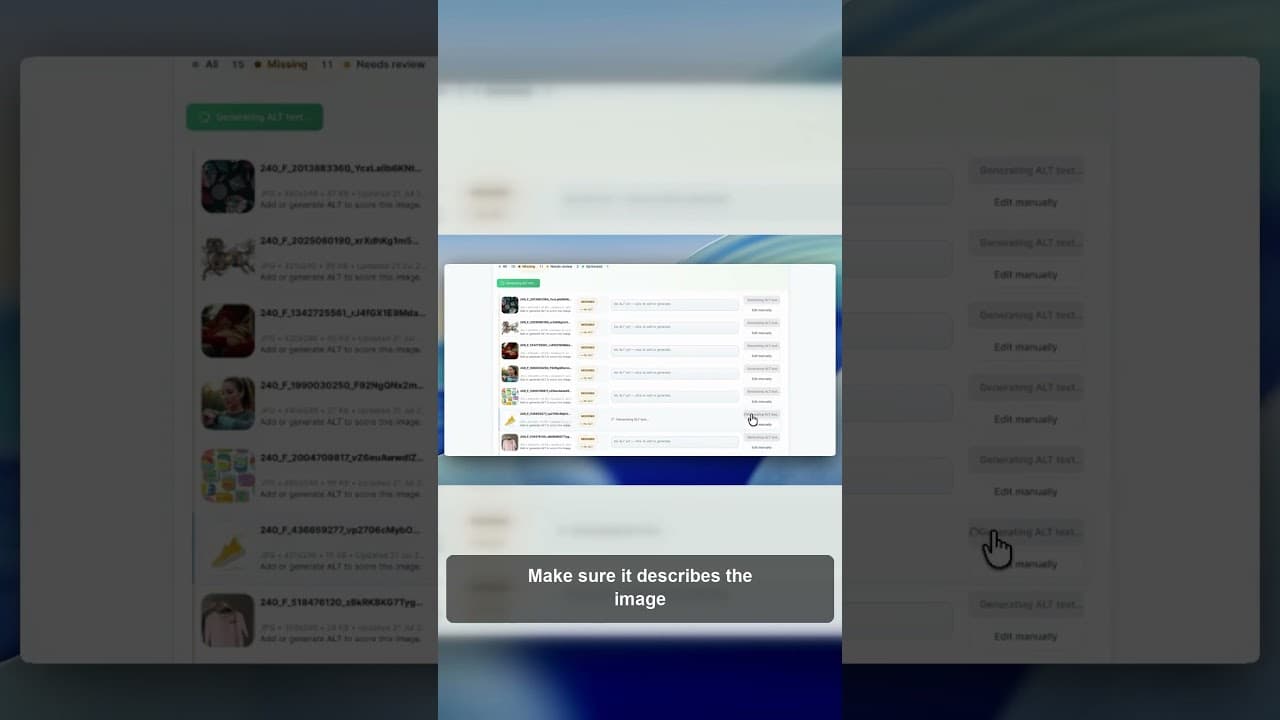
Why You Should Review AI Alt Text Before Publishing It
AI can draft WordPress alt text fast, but saving it unread is a mistake. Here's what to check before AI-generated alt text goes live on your site.