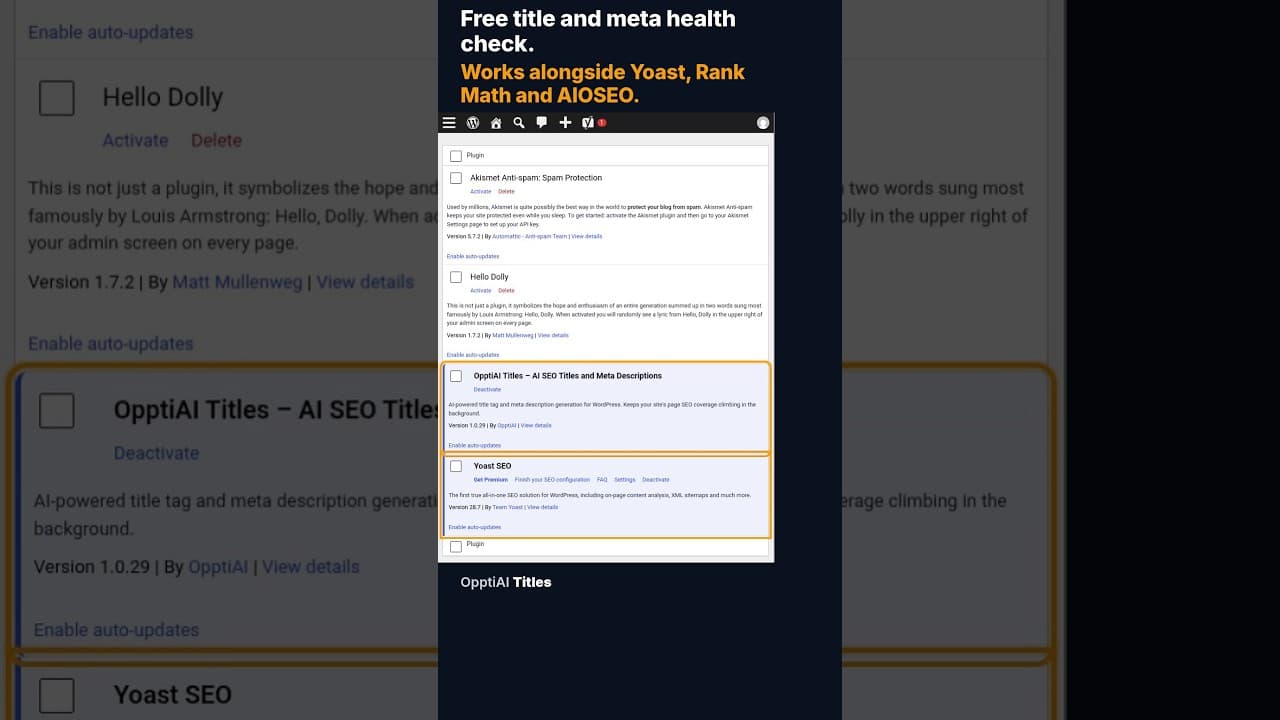
A Free WordPress Title and Meta Description Health Check
A free health check scans every WordPress page for missing or weak titles and meta descriptions and gives you a score. No account needed to see the result.
Most WordPress sites carry SEO title and meta description problems nobody has looked for, because checking means opening every page individually and comparing it against what should be there. A free health check that scans the whole site in one pass and hands back a score changes that from a task nobody has time for into something that takes a few minutes, with results before any account exists.
What the health check actually measures
The scan reads every published post and page, then checks each one against a short list of concrete criteria: is there a title tag at all, is it within a reasonable length, is there a meta description, is it within length, and is either one effectively empty, auto-generated from body content rather than deliberately written. That produces a site-wide score plus a per-page list — not just "you have problems" but exactly which URLs and exactly what's wrong with each.
Running this for the first time on a site that's been live for a while, especially one with pages added before any SEO plugin was active, routinely turns up gaps the owner didn't know existed: pages with no title tag at all, meta descriptions that are just the first sentence of the post pulled automatically, titles identical across several pages. None of that is visible from the WordPress admin's normal page list — you have to go looking specifically, which most people never do until something prompts them to.
Why it works alongside Yoast, Rank Math, and AIOSEO rather than replacing them
A site already running Yoast, Rank Math, or AIOSEO might reasonably assume a title and meta health check is redundant. It isn't, for a simple reason: those plugins manage the fields and offer guidance while you're editing a single page, but they don't typically surface a sitewide score or list every weak page in one view unless you dig through their reports. A health check built specifically to scan and score the whole site at once is complementary — it tells you where to look; your existing SEO plugin is still what you'd use to fix what it finds.
Reading the score without overreacting to it
A single number — say, sixty-two out of a hundred — isn't the point on its own. What matters is the list underneath it:
- Sort by missing versus weak, not just by score. A completely empty title tag on a key page is a bigger priority than a title that's merely a few characters too long.
- Check which pages actually get traffic. A perfect score on pages nobody visits is worth less than fixing the one weak title on your highest-traffic landing page.
- Look for patterns across pages, not just individual problems. If every product page shares the same generic title structure, that's a template-level fix, not twenty separate manual edits.
- Re-run the check after fixes, because a score taken once and never repeated tells you nothing about whether new pages keep the standard up as they're added.
No account, no connection, by design
Running this without signing up first isn't a marketing gesture — it reflects what the check actually needs, which is read access to title and meta fields that already exist in the WordPress database. There's no external data involved and nothing to look up on a server somewhere, so there's no genuine reason to gate the result behind a signup. You see the real number for your real site before deciding whether to do anything else with it.
What a weak score is actually costing you
A missing title tag usually means WordPress falls back to the page title or post title as the clickable headline in search results — sometimes fine, often generic and uncompelling compared to a title written specifically to earn the click. A missing or auto-generated meta description means Google either shows nothing useful under your result or pulls a seemingly random sentence from partway through the page, which rarely sells the click as well as two sentences written for that exact purpose. Neither failure breaks the page. It just makes it quietly less effective every time it appears in a search result, which adds up across however many impressions the page gets.
Frequently asked questions
Will running a title and meta description health check conflict with Yoast, Rank Math, or AIOSEO?
No. A health check that scans and scores your site doesn't edit anything or compete for the same settings those plugins manage — it reads the existing title and meta fields and reports on them. You can run one alongside any of those plugins without conflict; think of it as an audit layer sitting on top of whatever you already use to write and manage the fields themselves.
How often should I re-run a title and meta description check?
Monthly is reasonable for most sites, or immediately after a batch of new pages goes live, a theme change, or a migration — any event that could introduce new pages or strip existing fields. A site that only checks once, right after setup, has no way of knowing whether new content keeps pace with the standard it started with.
Is a low SEO score from a free health check something to worry about immediately?
Not on its own. The score is useful as a starting point for prioritisation, not as a judgement on the whole site. A sixty out of a hundred on a hundred-page site could mean forty pages need minor polish or ten pages need urgent attention — the per-page list underneath the score is what tells you which situation you're actually in, and that's what should drive what you fix first.
Checking your own score
OpptiAI Titles scans every page on your WordPress site for missing or weak titles and meta descriptions, gives you a score, and lists exactly what needs attention — alongside whichever SEO plugin you already run. See how it works.
Related Posts
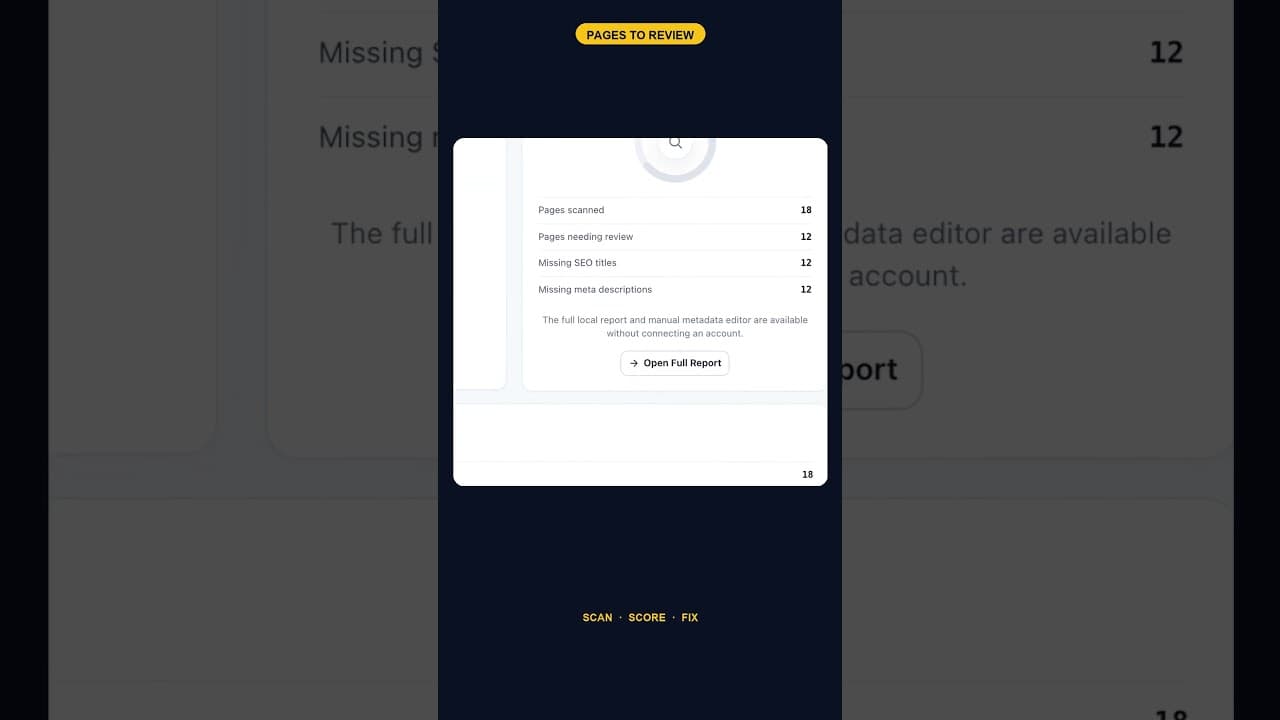
When 12 of 18 WordPress Pages Are Missing Titles and Meta Descriptions
An SEO scan finding 12 of 18 pages missing both a title tag and a meta description is one structural gap, not twelve separate oversights. Here's how to read it.
Does the Titles Plugin Conflict With AIOSEO?
AIOSEO stores titles and meta descriptions in its own fields. Here's exactly how OpptiAI Titles reads and writes around them without creating a conflict.
OpptiAI Internal Linking vs Link Whisper: An Honest Comparison
OpptiAI Internal Linking and Link Whisper both find orphan pages in WordPress. Here is what each one does, where Link Whisper does more, and how to choose.