Why Keyword-Stuffed Alt Text Still Fails
A filled alt attribute isn't finished alt text. Keyword-stuffed alt text passes a 'has alt' check and still fails SEO and accessibility.
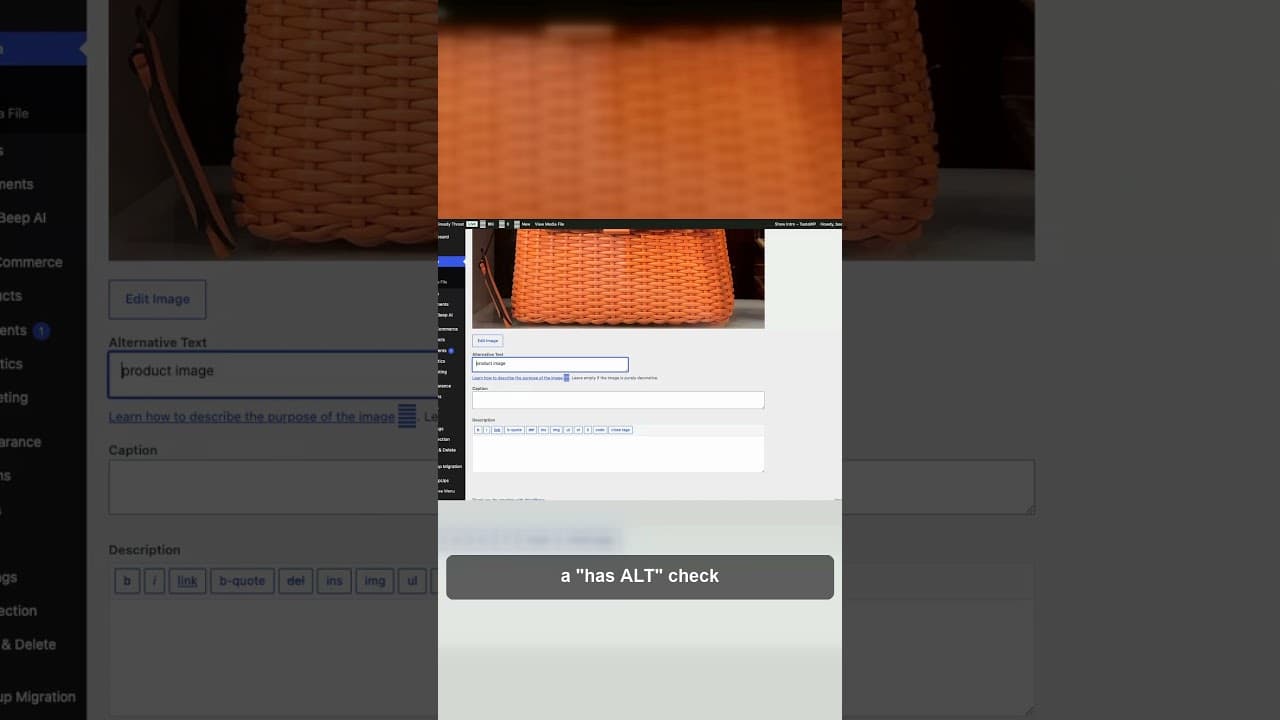
An alt attribute with text in it looks finished. A quick audit tool will tick it off as "has alt text" and move on. But "not empty" and "done properly" are two different bars, and keyword-stuffed alt text clears the first one while failing the second badly.
Here's a short video on why stuffing keywords into alt text doesn't work, even though it looks like it should.
What keyword-stuffed alt text actually looks like
It's rarely as obvious as keyword keyword keyword. Real examples are subtler, and that's what makes them tempting:
alt="blue wool jumper mens jumper wool jumper sale jumper uk" — reads like someone trying to rank for five variations of the same phrase in one attribute.
alt="running shoes trainers sneakers athletic shoes footwear" — a list of synonyms instead of a description of the actual photo.
alt="best waterproof jacket waterproof jacket review waterproof jacket 2026" — the same core phrase repeated with minor variation, clearly written for a search engine rather than a person.
Each of these has words in the alt attribute. None of them tells a screen reader user, or a search engine, what the image actually shows.
Why it fails accessibility
A screen reader reads the alt attribute aloud, word for word, in place of the image. Someone using one hears "blue wool jumper mens jumper wool jumper sale jumper uk" — a string of near-duplicate phrases with no clear description of what the product looks like. That's not a minor annoyance; it's the same failure as leaving the alt attribute empty on a meaningful image, just dressed up to look compliant.
Alt text has one job: describe the image well enough that someone who can't see it doesn't miss anything a sighted visitor gets for free. A keyword list doesn't do that job. It fills the field without fulfilling the purpose the field exists for.
Why it fails SEO too
This is the part that surprises people who stuff alt text specifically to help their SEO — it doesn't help, and it can actively hurt.
Search engines evaluate alt text as a description, not a keyword container. When the same phrase repeats with small variations, or when the "description" is really a synonym dump, it reads as manipulation rather than useful content. Google's own guidance on image alt text explicitly warns against keyword stuffing and describes it as behaviour that can be treated as spam.
There's also an opportunity cost. Alt text is prime real estate — a short, high-signal spot near the top of a page's content where you get to describe exactly what's in an image using natural language. Filling it with repeated keywords wastes that spot instead of using it to reinforce specific, useful information: the actual product name, colour, material, or use case.
What good alt text looks like instead
Good alt text describes the image the way you'd describe it to someone on the phone who can't see it — specific enough to be useful, short enough to not overstay its welcome.
Compare the stuffed version to a proper one for the same product:
Stuffed: alt="blue wool jumper mens jumper wool jumper sale jumper uk"
Proper: alt="Navy blue merino wool jumper with ribbed crew neck"
The second version is shorter, reads naturally, and actually tells you what the product looks like. It happens to contain relevant terms — "wool jumper," "navy blue" — because those are genuinely the words that describe the image, not because they were inserted to hit a count.
A quick process for writing alt text that isn't stuffed
- Look at the image, not the target keyword. Write down what's actually visible — colour, material, style, setting — before thinking about SEO at all.
- Turn that into one plain sentence. No repetition, no synonym lists, no "best," "top," or "buy now" language that belongs in ad copy, not a description.
- Check it reads naturally aloud. If it sounds like something a person would say when describing the photo to a friend, it's probably right. If it sounds like a list, rewrite it.
- Keep it under about 125 characters where possible. Screen readers announce the full string; shorter, denser descriptions are easier to process than long stuffed ones.
- Skip decorative images entirely. If an image adds nothing beyond visual polish, an empty alt attribute (
alt="") is correct — don't force a description onto an image that doesn't need one.
Frequently asked questions
Does keyword stuffing in alt text hurt my SEO rankings?
It can. Search engines treat alt text as a description field, and repeating the same phrase or listing synonyms reads as an attempt to manipulate rankings rather than describe the image. Google's guidance specifically discourages this pattern. At best, stuffed alt text provides no ranking benefit over a proper description; at worst, it's flagged as spammy content, which can affect how the page around it is trusted.
How is keyword stuffing different from just including my product keyword in alt text?
Including your product's actual name or a relevant term is fine, and often correct, as long as it's genuinely describing the image. "Navy blue merino wool jumper" naturally includes the product type and colour because that's what the photo shows. Stuffing happens when you add extra variations or synonyms purely to cover more search terms — "wool jumper mens jumper jumper sale" — rather than because they add descriptive value.
How do I find keyword-stuffed alt text across my whole WordPress site?
Manually opening every image isn't practical past a handful of pages. A bulk audit that scans your WordPress media library can flag alt text that repeats phrases, reads as a keyword list rather than a sentence, or is unusually long for what the image shows — surfacing the pattern across your whole site in one pass rather than page by page.
Try OpptiAI Alt Text to audit your site's alt text and catch keyword stuffing at scale, or run a free image SEO audit to see where your alt text needs work.
Related Posts
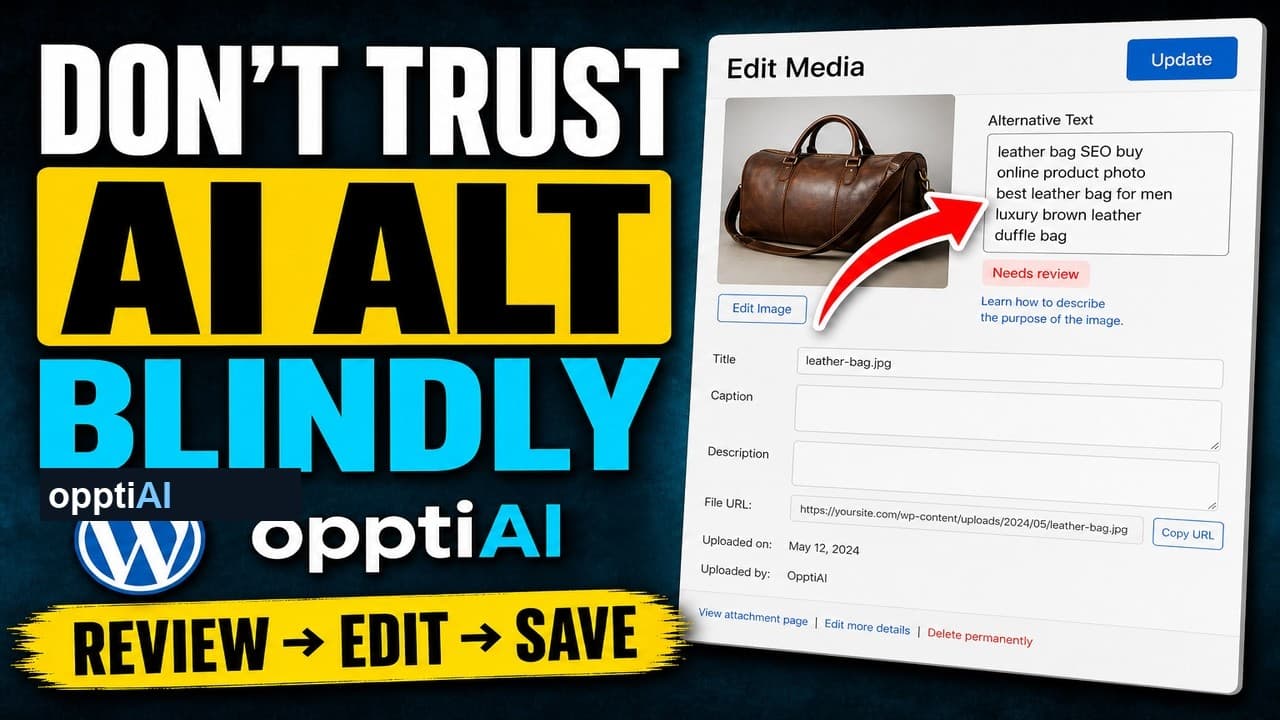
The Four-Point Checklist for Reviewing AI Alt Text
AI alt text fails in a small number of predictable ways. Run this four-point checklist before saving to catch weak, wrong, and keyword-stuffed suggestions.
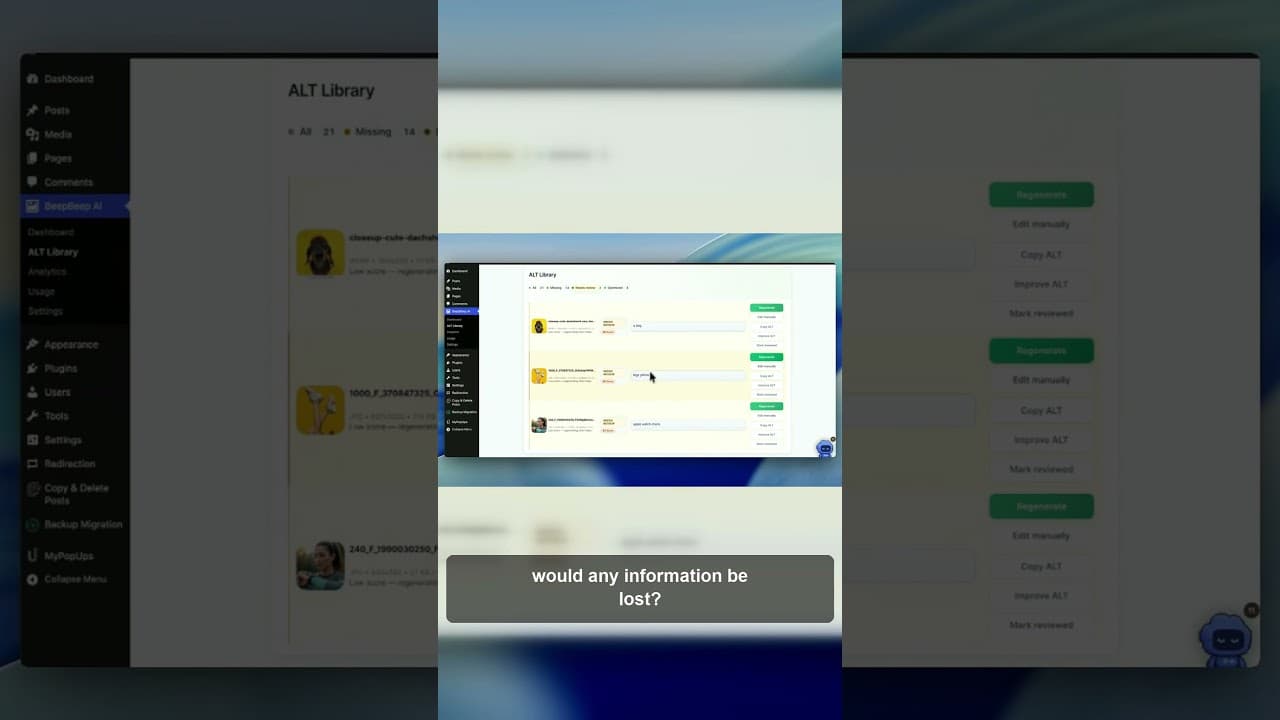
The 5-Second Test for Every Alt Text Decision
One question decides whether a WordPress image needs alt text or should stay empty: would removing it lose information? Here's how to apply it fast.
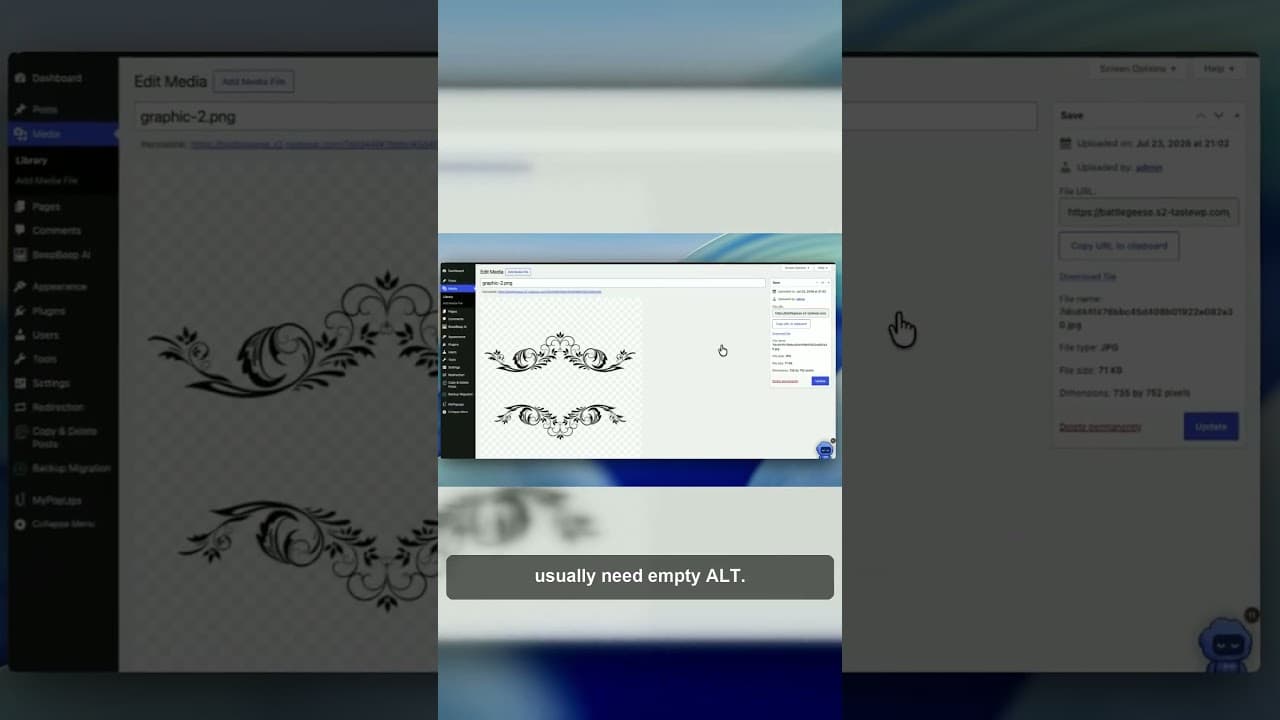
How to Test That Empty Alt Text Actually Works
Setting alt text to empty isn't the same as it working correctly. Here's how to verify decorative images are actually skipped by screen readers.