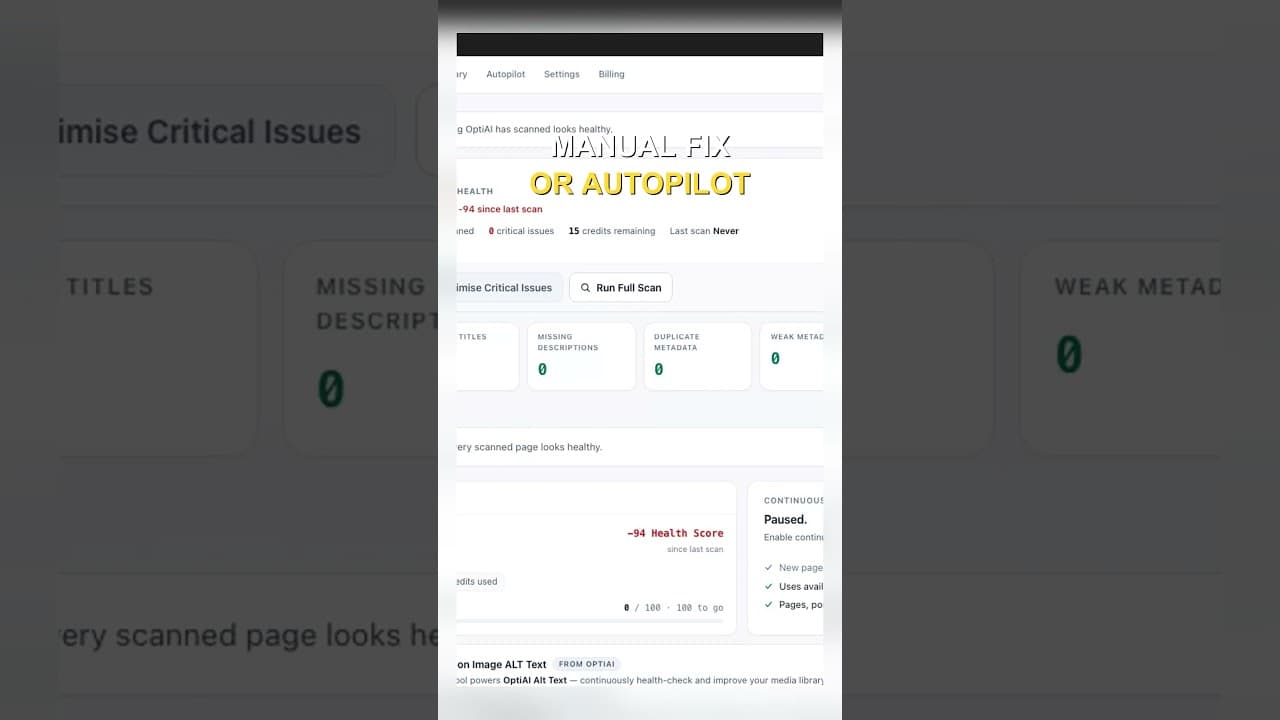
Manual or Automated Title Tag Fixes: Which Fits Your Site
Fixing title tags by hand works for some sites and quietly fails for others. Here's how to decide whether manual edits or automation fits yours.
"Just fix the title tags" is straightforward advice for a ten-page brochure site and genuinely bad advice for a WooCommerce store adding forty products a week. The size of the fix isn't really the variable that matters — it's how fast new titles need writing and how often existing ones drift, and that's a question worth answering deliberately instead of defaulting to whichever approach you already know.
When manual fixing genuinely works
Manual title editing is the right call more often than automation advocates like to admit. It works well when new pages are added slowly enough that writing a considered title takes minutes, not hours, per week — a small site publishing once or twice a month, a portfolio, a local business site with a handful of service pages. It also works when the person writing titles has enough context on search intent and brand voice that a generic pattern would actually be worse than their own judgement, which is common on sites with a small, focused set of high-value pages where each title deserves individual thought.
The failure mode of manual fixing isn't the writing itself, it's coverage over time: titles written well once don't get revisited, new pages arrive faster than anyone circles back to check them, and the site accumulates a slow drip of untitled or default-titled pages that nobody's actively ignoring, just not actively watching either.
When manual fixing quietly stops working
The tell isn't a single bad title, it's a backlog nobody can see growing. This shows up on sites publishing several pages a week, WooCommerce stores where products get added faster than anyone writes custom copy for each one, multi-author sites where enforcing a title standard across five or six writers is a management problem as much as a writing one, and any site that's been through a migration, rebrand, or bulk import that could have silently overwritten a chunk of titles at once.
In each of these cases the problem isn't that manual editing produces worse titles — a person will usually still write a better individual title than an automated draft. The problem is that manual editing doesn't scale to catching every gap as it appears, so the backlog grows invisibly until someone runs a full audit and finds hundreds of pages with default or missing titles.
A practical walkthrough: deciding which approach fits
- Count your publishing velocity. How many new pages, posts, or products go live in an average week? Under five, manual is usually sustainable. Over twenty, it's a stretch for anyone to keep up without missing some.
- Check how many people can publish content. A single editor can maintain a mental model of what's been titled well. Five or six authors across different teams generally can't, without a shared checklist or automated check to catch what falls through.
- Look at your last migration or import. If you've moved platforms, restored a backup, or bulk-imported products in the last year, run a full title audit now regardless of your answer to the first two questions — that's a common silent-overwrite event.
- Decide on a hybrid, not an all-or-nothing choice. Many sites do best writing high-value pages (homepage, key landing pages, top products) by hand, while using an automated check to catch drift and gaps everywhere else. That's not a compromise, it's matching effort to where a human's judgement actually adds the most value.
- Set a re-check cadence either way. Manual-only sites still benefit from a quarterly full audit; automated checks still need a human reviewing suggested drafts before they go live. Neither approach removes the need for the other entirely.
Frequently asked questions
Is automated title generation good enough to skip manual review completely?
No, and treating it that way is where automation goes wrong. An automated check is good at finding every page with a missing, duplicate, or too-short title across a site faster than a person can, and at drafting a reasonable starting point. It's not reliably good at matching the specific voice or search intent nuance a human writer would catch, especially on your highest-value pages. The practical pattern is automated discovery and drafting, human approval before anything publishes.
How do I know if my site has already outgrown manual title management?
Run a full crawl and compare the count of missing or default titles against how many pages you thought needed attention. If the actual number is meaningfully larger than what you'd have guessed from memory, that gap is the signal — it means titles are going stale between your manual passes faster than you're aware of, which is exactly the coverage problem automation is meant to solve.
Does switching to an automated check mean giving up control over the wording?
No. A well-built automated title check drafts suggestions and flags gaps, but the site owner or editor still approves each one before it goes live — it's closer to a spell-checker for titles than an autopilot that publishes without review. You keep the final call on wording; what changes is that you're reviewing a shortlist of flagged pages instead of manually re-auditing the entire site to find them.
Most sites don't need to choose one approach forever — they need the right one for where the site is now, and a way to notice when that changes. OpptiAI Titles runs an ongoing check across your titles and meta descriptions, drafts suggestions for anything missing or weak, and leaves the final approval to you, working alongside whichever SEO plugin you already run.
Related Posts

Why Google Rewrites Your Meta Description
Google replaces the meta description you wrote more often than not. Here's what actually triggers a rewrite and how to write descriptions it keeps.

Use Search Console CTR Data to Fix the Right Titles First
Rewriting every title tag wastes effort. Search Console's CTR data shows exactly which ones are losing you clicks, so you fix those first.
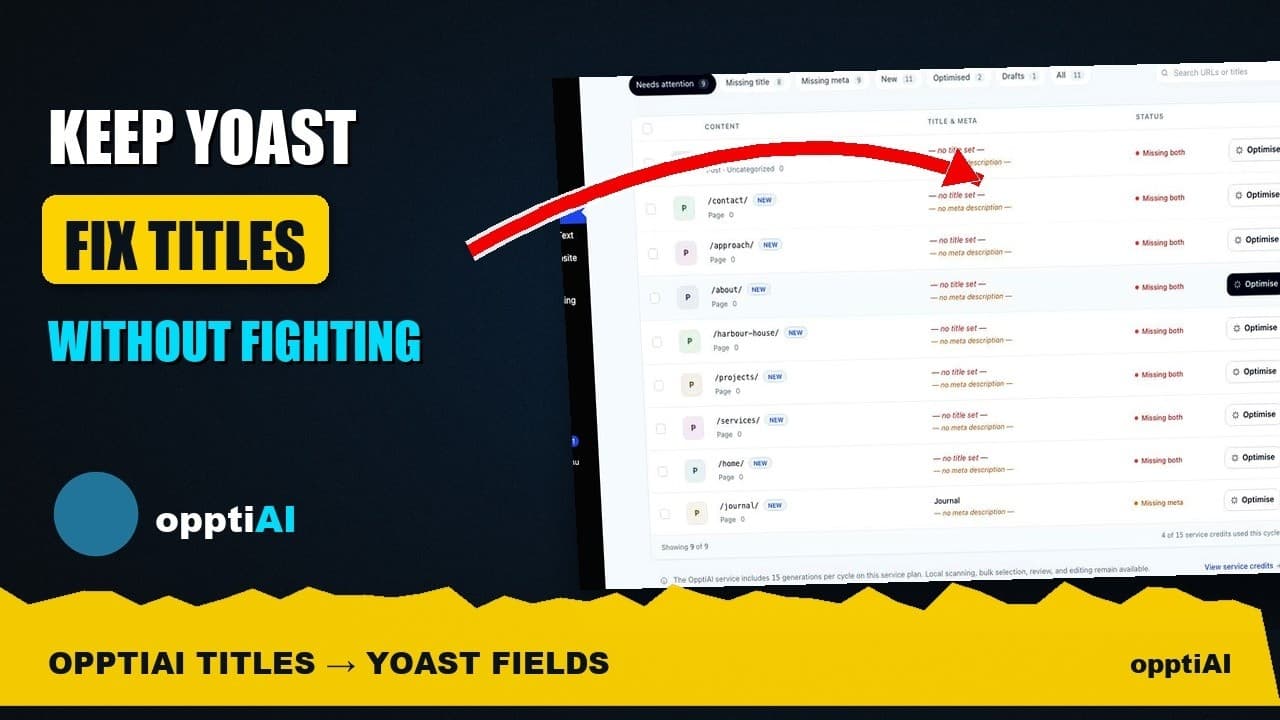
See Your WordPress Title Fixes Show Up Inside Yoast
Fixed a weak title in an audit tool but not sure Yoast picked it up? Here's exactly where to check, and what it means if the two disagree.